
The short answer: The fight over your mother’s dishes was never really about the dishes. A 2005 study on family inheritance found that personal possessions, not money, are more likely than finances to cause family conflict after a death, because each object carries a private meaning nobody else can see. The way to stop family fights over sentimental items after death is to write down who gets what while everyone is still here to ask, not divide things after the fact.
If your siblings are already arguing over who gets the recipe box or your father’s watch, there’s a reason it’s happening, and it has a name.
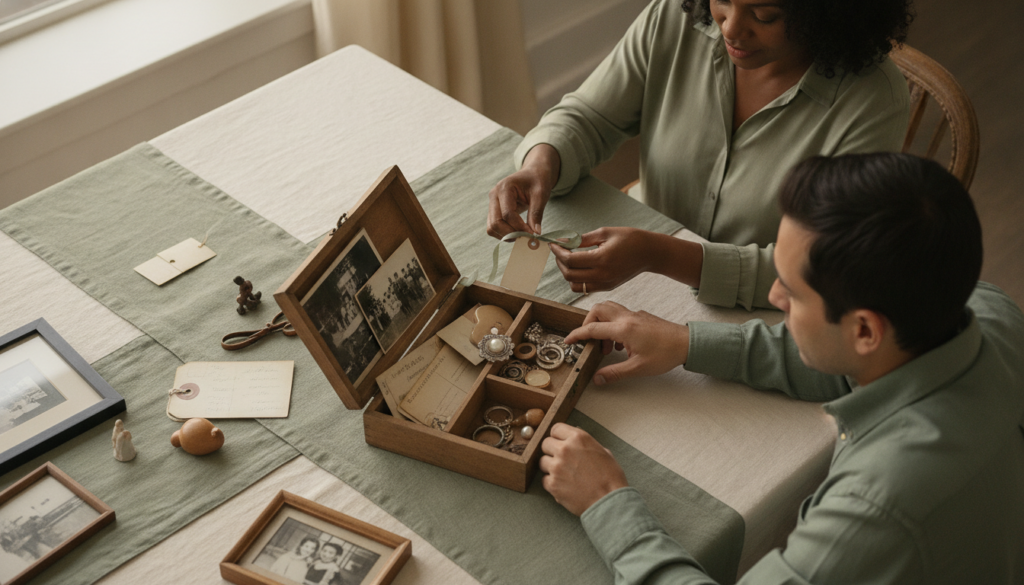
Researchers call this a dispute over non-titled property: any belonging without a deed or account number attached, like furniture, photographs, tools, jewelry, letters, or the china nobody uses but everyone remembers. It’s the opposite of a fight over a house or a bank account, and it’s the one families are least prepared for.
Is the fight really about the money?
No. In the 2005 Allianz American Legacies Study, a survey of boomers and elders conducted by Age Wave, Allianz Life Insurance Company of North America, and Harris Interactive, researchers found that fulfilling last wishes and distributing personal possessions were more likely to cause family conflict than dividing up finances. The math is rarely the problem. The meaning is.
Why does a recipe box cause a bigger fight than the house?
Because the recipe box isn’t standing in for a dollar amount, it’s standing in for your mother. The item is doing emotional work that has nothing to do with its price tag.
A few things tend to turn a simple handoff into a family rift:
- How emotionally sensitive the topic is
- Whether the family ever discussed a plan out loud
- Differing ideas of what counts as fair
- Differing personal meaning attached to the same object
- Low awareness that there are options for how to divide things
Inheritance isn’t just an economic or legal matter. It carries real emotional and family weight.
What actually predicts whether a family will fight?
Not money, and not whether there was a will. Grief researcher Kenneth J. Doka, writing for the Hospice Foundation of America, reportedly found that one of the strongest predictors of conflict over a will was prior family conflict. If your siblings could bicker about the seating chart at Thanksgiving, the estate will surface it again. If they couldn’t, it likely won’t.
Why does the fighting start right after a parent dies?
Because the person who used to stop it is gone. Doka’s case work describes parents who actively shut down arguments while alive, acting as the family’s unofficial referee. When that parent dies, disagreements held underground for years can surface for the first time, often over exactly the kind of small, sentimental thing nobody planned for.
How do you stop family fights over sentimental items after death?
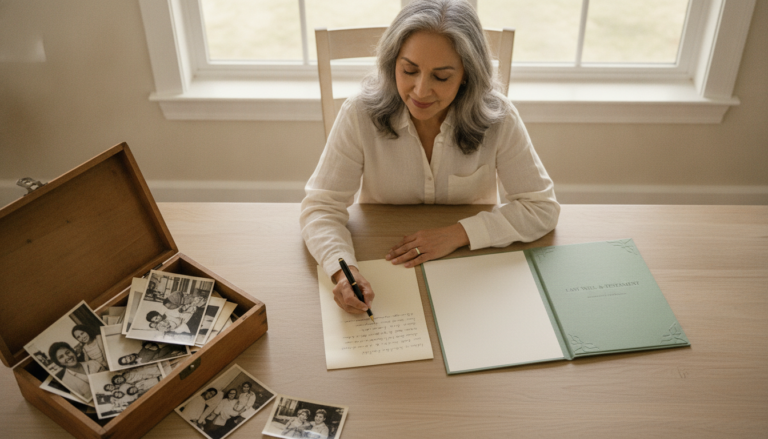
You write it down, item by item, while the person who cares most is still around to say it out loud. That’s the shift: from dividing things after a death, when no one can ask the one person who’d know, to documenting decisions while they can still be made calmly.
Most families never get this far. A January 2017 Caring.com survey reported by AARP found that roughly 40% of American adults have a will or living trust at all, and the top reason given was simply not getting around to it. The gap is generational too: Caring.com has separately found that 81% of adults 72 and older have their wishes documented, compared with 22% of Millennials, meaning the generation sorting through a parent’s belongings right now is often the same generation that hasn’t written down its own.
Write the list somewhere durable, not on a sticky note that turns up two years too late. Myend keeps your end-of-life contacts and instructions in one place, and furniture and jewelry aren’t the only things worth documenting this way, since your digital inheritance needs the same kind of list. Not sure where to start? Ask Justine anything, right on Myend.com, or see what fits on the pricing page.
Frequently asked questions
Is it normal to fight over sentimental items instead of money?
Yes. The 2005 Allianz American Legacies Study found that distributing personal possessions and fulfilling last wishes were more likely to cause family conflict than dividing finances. The fight your family is having over who gets certain items is one of the most common forms of inheritance conflict, not a sign that something has gone wrong.
Why does the fight often start right when everyone is already grieving?
Because the parent who used to referee family arguments is no longer there to stop them. Grief researcher Kenneth J. Doka’s case work found that a parent who actively suppressed conflict while alive was acting as the family’s emotional mediator, and disagreements kept below the surface can emerge for the first time after that parent dies.
What can you do if the fight has already started?
The Massachusetts Council on Family Mediation notes that probate mediation is built for disputes with no clear-cut legal answer among family members. It can resolve or clarify ambiguities in a will, costs far less than litigation, and its purpose is preserving relationships between survivors, not just dividing the estate.
This article is general information, not legal, medical, or financial advice. Consult a licensed professional in your jurisdiction for guidance specific to your situation.
Last reviewed: August 2026