Death rate
Romaniau2019s average mixed death rate is a high one, especially for European standards.


Romania is a land of myths but also rich history. From legendary bloodthirsty vampires to playing games with the dead at funerals, it follows a creative approach to life, death and the dead! At the same time, Romania is a fascinating crossroads of older, humorous death customs and solemn, Christian views of afterlife. You can join us too in this journey while we explore traditions and superstitions! Finally, we learn more about the King of the Gypsies and visit the, so called, Merry Cemetery.
Romaniau2019s average mixed death rate is a high one, especially for European standards.
Usually Romanians bury their dead after the wake is over.
There is no state religion in Romania.
Romania has a low rate of utilized organs from donors.
Romania is a land of myths but also rich history. From legendary bloodthirsty vampires to playing games with the dead at funerals, it follows a creative approach to life, death and the dead! At the same time, Romania is a fascinating crossroads of older, humorous death customs and solemn, Christian views of afterlife. You can join us too in this journey while we explore traditions and superstitions! Finally, we learn more about the King of the Gypsies and visit the, so called, Merry Cemetery.
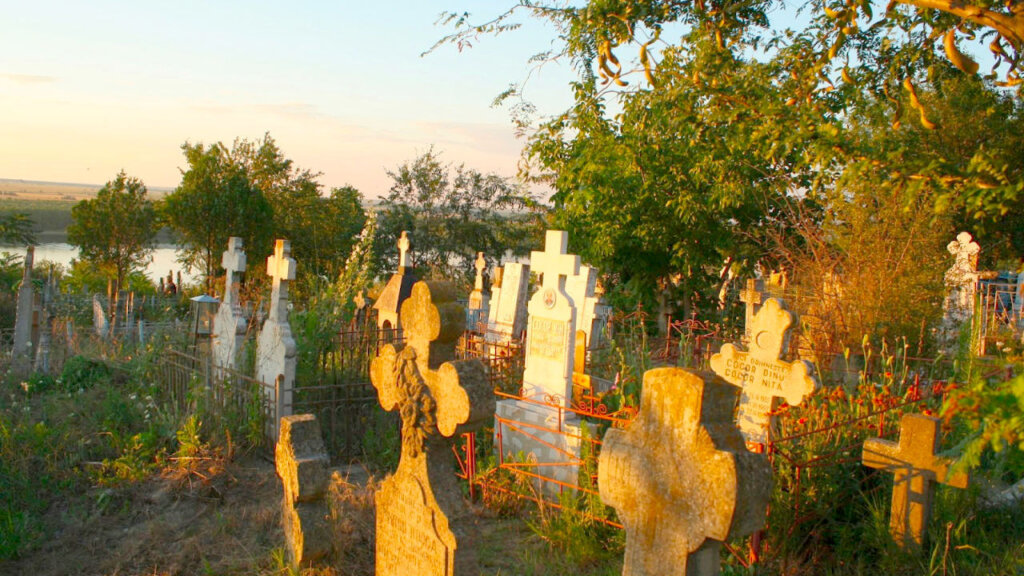
First of all, it’s important to point out that there are many old traditions and superstitions in Romania. And many of them are about someone’s death. Furthermore, some are dying customs, while others still go strong, but they are all equally fascinating!
Certain old Romanian death customs adopted a more irreverent approach towards dead. Due to an effort to reduce its negative impact on the living, these customs are a bit different to what you may be used to. For instance, in some extreme cases the body of the dead (mortu in Romanian) was even the object of games.
More specifically, people tied it up with ropes and turned it into a puppet in order to frighten people that visit the relatives. So these old Romanian customs used mockery and laughter, in an effort to ground the grieving family members to the present!
Therefore, such death customs follow a diametrically opposite approach to most Western traditions.
It was also significant to light a candle for the dead and keep it lit as long as possible. This aimed at safely guiding the souls of the dead to the afterlife too. Sometimes, however, Romanians did not light up candles if the deceased committed suicide or in case they died far away from their families. As a result, there is a special day (November the 21st) when Romanians light candles specifically for these souls too!
Moreover, according to Romanian death superstitions, all mirrors and similar reflective surfaces like water, must be covered with a black canvas. Otherwise the dead may see their reflection, get trapped in this realm and become a ghost! Additionally, this may apply even if the procession needs to cross water on its way to the cemetery after the funeral.
Adding to the above, Romanians take additional precautions to protect the dead too. For instance, they often remove animals from the premises during a wake. Due to their sharp senses, pets may feel the dead. Therefore, by removing the animals Romanians try to prevent the spirit of the deceased from turning into a ghost.
Romania became Christian during the Byzantine times, when monks converted the people of Wallachia and Transylvania. Because of that, the vast majority of the country is still Christian, adhering to the Romanian Orthodox Church. This, of course, also influences how Romanian burial rites take place.
Firstly, the use of candles we mentioned above remains very popular and so does the precaution of covering mirrors! Moreover, the family may hire a professional mourner, called a bocitoare, who is usually a woman. This woman then joins the wake and cries for the dead in case the tears of the family have run dry. Similar old mourning traditions can be found in other parts of Eastern Europe and even Africa.
Nowadays these professional “wailers” have almost gone extinct. They support, though, that it is not just the younger people forgetting this custom. Instead, they point out that is the Church’s fault since it condemns professional mourning as a pagan tradition.
“Priveghi” or Watch, is the wake and it usually lasts for three days. Additionally, a priest reads a lot of prayers during these days. Relatives also make “Coliva” which is a sweet boiled wheat grains dish, very common in Orthodox traditions across Eastern Europe. It is made exclusively for funerals or wakes, and most people would never make or eat it unless they were joining any of these occasions!
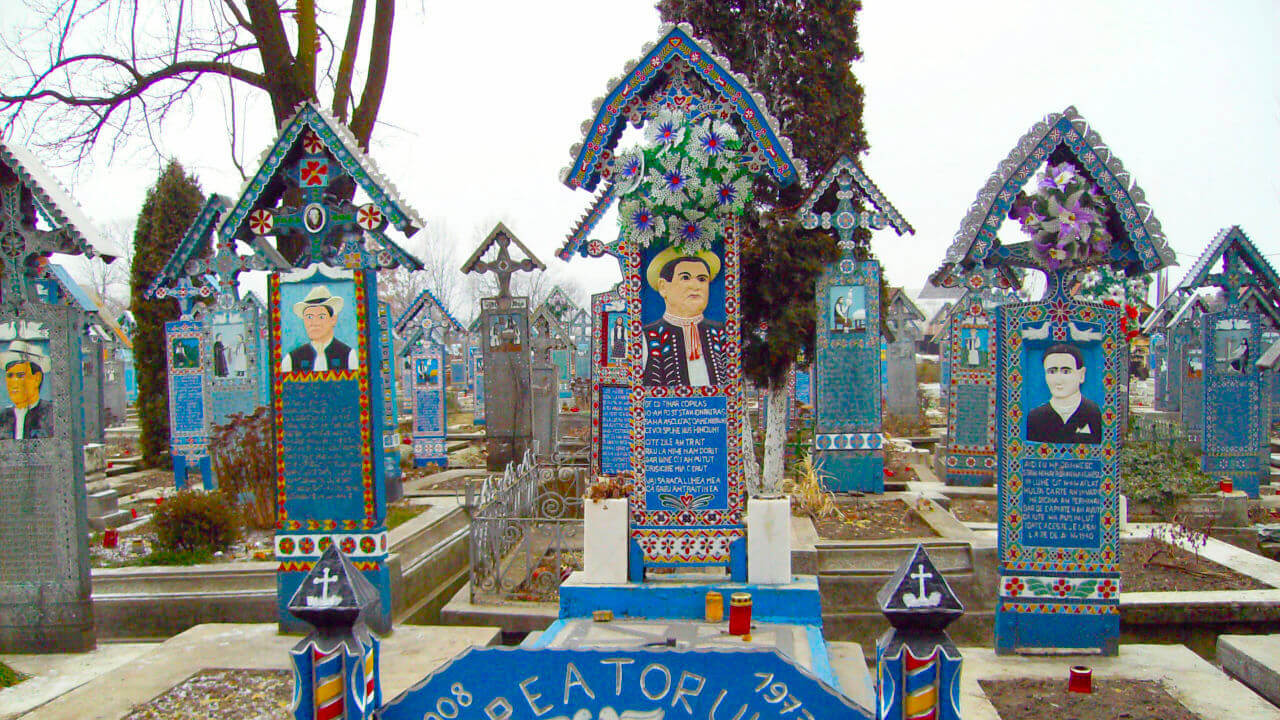
It is already clear that Romania loves following alternative death customs. The Merry Cemetery is perhaps the greatest example of that.
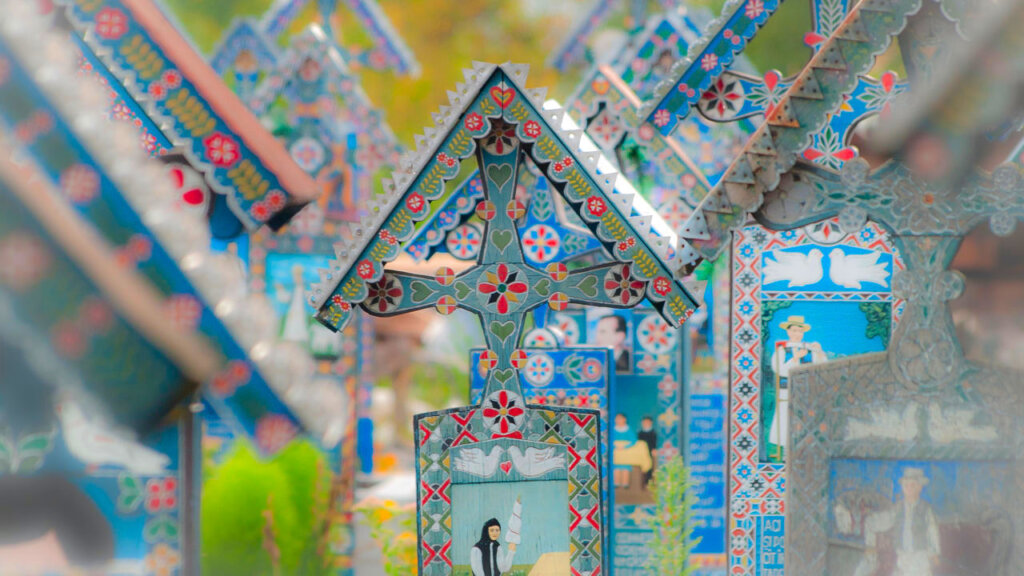
The Cimitirul Vesel, translated to Merry Cemetery, is a graveyard in the village Săpânța, in Northern Romania. Moreover, this cemetery has earned its name due to the brightly colored paintings that adorn the tombstones. These paintings were not always made by someone trained in the arts. They also depict important moments or skills of the person buried in that grave. The first tombstone was prepared in 1935 by Stan Ioan Pătraş, a local artist, and by the1960s there were over 800 colorful tombstones at the Cemetery.
Most European traditions view the death of a loved one as a painful and sad event in one’s life. The traditions we discussed above and the Merry Cemetery, though, stand opposite to such views. That is not to say, of course, that Romanians do not grieve! They just do so in different ways. This is also the reason that the Merry Cemetery might be linked to the Dacian culture.
The Dacian culture is an ancient philosophical and religious approach that sees death as a joyous moment in one’s life. That is so because the ancient Dacians, an ethnic group of the lower Danube, celebrated the immortality of the soul. Additionally, they saw death as a joyous milestone of someone’s life! Nowadays, these ancient religious views, called Zalmoxis, have ties to Romanian Nationalism.
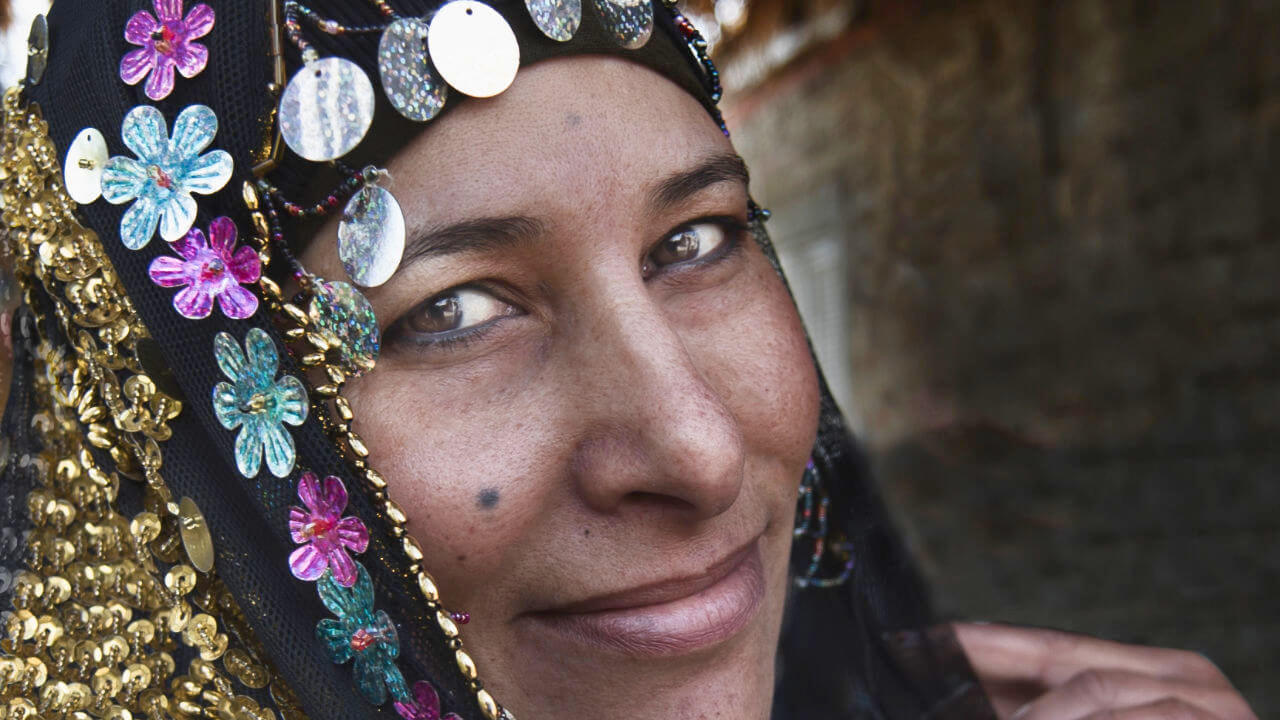
On this final part of the post we focus on the Roma population of Romania, known also as Romani or simply gypsies. There are officially over 600.000 Roma gypsies in Romania. However, due to discrimination, it is believed that many Roma remain undocumented, so their actual population is estimated to be between one and three million. It is therefore interesting to see how a gypsy funeral takes place in Romania.
Romani Gypsies are mostly Orthodox as well, usually bringing their deceased home the night before the funeral. Once the loved one has been buried, the family normally visits the grave often and keeps it impeccably clean.
A very public occasion of a gypsy funeral, was that of the King of Gypsies: Florin Cioba. He was a Roma activist who was considered to be the King of Gypsies in Romania. Florin died unexpectedly in 2013 and his burial was an important moment for the gypsy community in Romania.
Additionally, he was a big advocate of Roma rights and meant very much to his community. Therefore, when he passed in the age of 58, thousands of gypsies went on the streets, joining the procession during his funeral. Many mourners joined for the entire 7km procession, and Cioba’s coffin was carried exclusively by his followers. Finally, the coffin was also air-conditioned and had a glass panel so his supporters could pay their respects.



Start your plan today. It's free, private, and takes a few minutes.