Death rate
The average mixed death rate of Italy is 10,5 per 1.000 people (2018).


Italy is the largest Catholic country in Europe, and the fifth largest in the world. However, folk traditions and modern Italian death practices are complex and often also influenced by ancient Roman death customs.
The average mixed death rate of Italy is 10,5 per 1.000 people (2018).
Following Catholic standards, Italians bury their dead are buried soon after death.
Italy is a stronghold of Roman Catholicism, with the vast majority identifying as Christians.
The rate of utilized donated organs is 22,80 per million population (2019), indicating that Italy has one of the highest European rates.
According to Roman beliefs, funeral rites are the only way that the soul of the dead can move to the afterlife. In a way, it was through these rites that the Romans separated the dead and the living.
Romans also found it important to continue honoring and remembering their dead. That way the soul of the deceased could transform into, guardian spirits. Alternatively, they could turn into the di manes, nameless lesser gods of the underworld with no individual characteristics. However, dead ancestors kept at least part of their individuality. That is clear by goods that the living offered at the graves of their dead relatives. These grave goods included clothing, perfume, food and drinks and the dead enjoyed them.
If the living forgot or dishonored the dead, the souls of their ancestors could turn into vengeful spirits. People that did not receive any burial rites could also become similar dangerous beings. These spirits, called Lemures, haunted the living and had to continue existing on earth. Lemures could be appeased during the Lemuria festival.
Romans, viewed corpses as polluting. However, they also strictly followed the belief of pietas. This refers to the love and sense of duty that Roman had towards their ancestors. Their burial practices needed to find ways to bridge these two contradictory views.
In order to address these issues, Romans began burying their dead. Around the middle of the times of the Republic though, they started cremating their dead instead. Cremation remained the main post-mortuary approach until the second half of the Roman Empire. After that, Romans and their Italian descendants reverted back to burials.
During the cremation period, funerary urns were very popular, while once inhumation returned, the Roman sarcophagus became common. Regardless, for a funeral to be complete, there had to be feast that had a double meaning: the soul of the deceased was then able to move to the underworld and the relatives could move on with their lives. The living still needed to remember the dead with some families setting certain commemoration days annually. Interestingly, the Roman government also had designated commemoration days, one of them being the Parentalia (13 to 21 of February).
Most Romans were buried outside of the sacred boundaries of the city. A prime exception to that was the death of an Emperor. Alongside other important Romans, Emperors were buried within city limits as a ultimate sign of respect and honor.
An interesting fact also about the Colosseum of Rome is that it has a complicated history with death. Originally, it was an arena where champions would fight and die in front of an audience. Historians, estimate that over 400.000 fighters have died in the arena. During Medieval ages, it was even used as cemetery.
In modern times, the Colosseum became a symbol against death penalties worldwide, with demonstrations taking place next to it. Additionally, since 2000 local authorities change the lighting of the Colosseum from white to gold in specific occasions. Specifically, that happens for every death sentence of a prisoner that is commuted or if the death sentence is abolished in any region worldwide.
Folk traditions in Italy have ties to some of the Roman beliefs mentioned above. For instance, Italian peasants in medieval times thought that they had to perform flawless death rituals. Otherwise, the dead could come back to haunt them. Italian were burying deceased relatives with small personal belongings, cigarettes or money.
An example of that practice is the La Necropoli dei Bambini, meaning the Necropolis of Babies. Research at the Necropolis indicates that children were sometimes buried with animal bones. In some cases, parents sacrificed a puppy and buried it with their child. Even more rarely, researchers found the remains of girls with stones in their mouth or on their hands, stopping them from returning from the grave.
Ritual mourning, or Lutto, was a common practice in the south of Italy during the 20th century. It was an intense, dramatic, rhythmic way for both men and women to show their grief. In place of words, the grieving family would use lutto to express the grief and come to terms with their loss.
During Lutto, women would move back and forth, and hit their heads and chests. In some cases they would even pull out some of their hair. To them that functioned as form of expressing their grief but also to protest death. The physical pain in combination with their grief would spark similar reactions of Lutto from relatives and visitors. Another part of Lutto, dictated that women should wear a black mourning garment including a veil. That was not only a sign of grief, but also an invitation for other around to join in and take part in the grieving person’s new reality.
Nowadays, Lutto is much less common in Italy. That is a result of the efforts of the Catholic Church, that views Lutto almost as a heretic practice. The reasoning of the church is that the intense and dramatic nature of Lutto goes against the Catholic principles of Christian Resurrection.
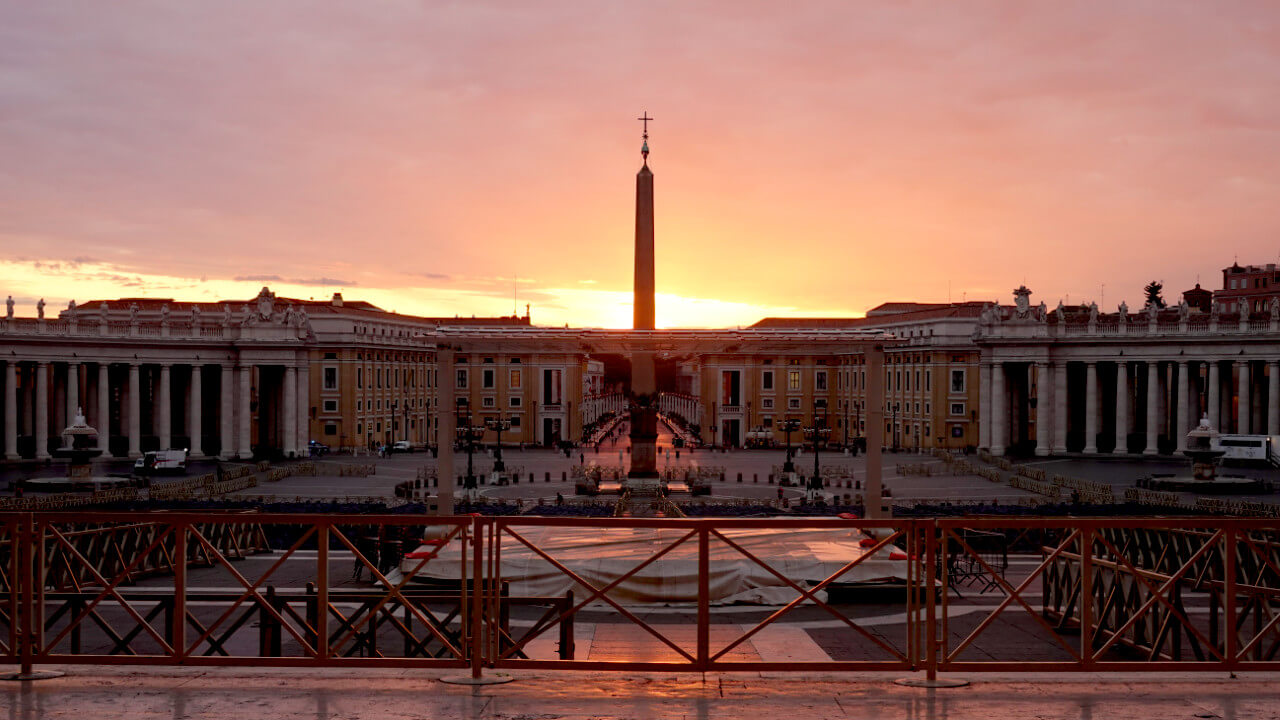
The home of Catholicism is Vatican and so Italy too has historically, culturally and socially strong ties with it. Over 78% of Italian identify as Catholics and most receive a Catholic funeral. That means requiem mass are common and that Vatican’s Canon Law dictates how ceremonies will take place. Additionally, Roman Catholicism favors earth burials but also – hesitantly – allows for cremation.
Unbaptized children or non-Catholics may also receive Catholic funerals unless they explicitly had said otherwise. However, not all Catholics may have a Catholic funeral. Exceptions are held for known heretics and those who choose cremation as with anti-Christian motive. If a one’s sins are so heavy that a chance of having Catholic funeral could cause a scandal, then it is also avoided.
Another set of rules in case of cremation in Italy suggest that the family can neither scatter the remain nor keep them at home. Instead they have to keep them at mausoleum. Other funeral-related customs include decorating with flowers, and neighbors bringing over food the grieving family.

A Blue Zone is a region, or sometimes even just a city, where locals tend to have a higher longevity. In other words, the local life expectancy is much higher than the national average of the same country. Furthermore, some characteristics of such Zones include, close family and community ties, moderate but everyday physical activity and the frequent consumption of legumes.
Italy’s own Blue Zone is on the island of Sardinia, and specifically to the eastern village of Seulo. After all the last 20 years, there have been over 20 centenarians (people older than a century) in Seulo. In addition to the characteristics we mention above, there are some additional potential reasons that explain the longevity of Sardinians. These include the consumption of wine and fava beans. Finally, many locals enjoy gardening in the sun!
We hope you learned something new regarding this country’s death practices!
Another culture that viewed the dead as polluted was the Ancient Persian Zoroastrians. Read more about their Towers of Silence here. If you would also like to read more on death superstitions, feel free to check our Russia, France or Romania articles.





Start your plan today. It's free, private, and takes a few minutes.


._Ca._220-230_AD._In_the_Metropolitan_Museum,_New_York.jpg)
.jpg)